
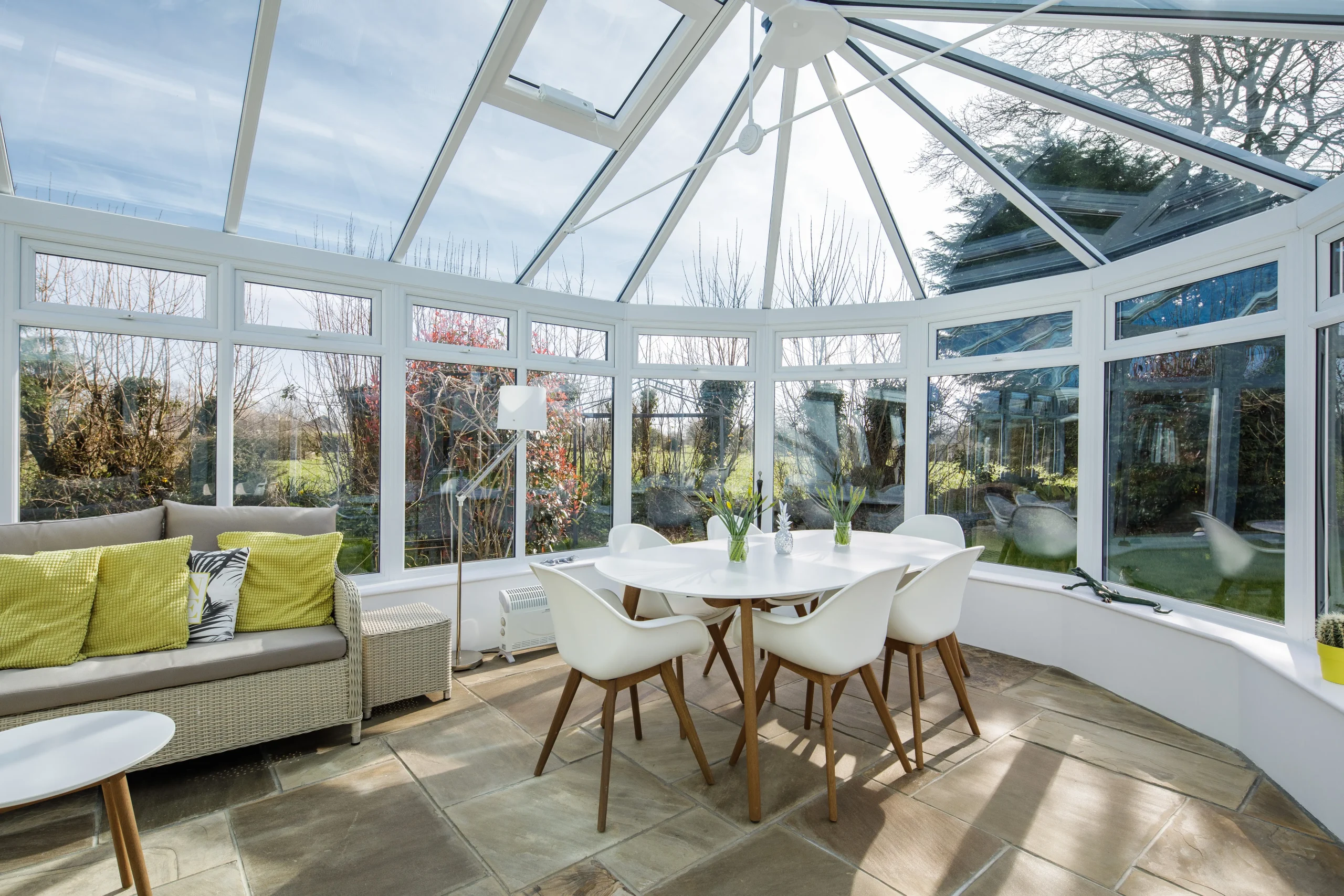
When you want to expand your living space, let in more natural light, and add value to your property, a glazed home extension is an unbeatable choice. However, many homeowners hit a wall when trying to decide between the two classic options: a conservatory or an orangery.
While the terms are often used interchangeably, distinct structural, aesthetic, and functional differences set them apart. Furthermore, looking at how they compare to a standard brick-built home extension can help you map out your project with complete confidence.
This comprehensive guide cuts through the industry jargon to compare orangeries and conservatories head-to-head – including how they stack up as full home extensions.
What Is a Conservatory?
Classically defined, a conservatory is a light-filled garden extension where glass takes total center stage.
-
- The Architecture: Technical specifications typically dictate that a conservatory features glass walls covering at least 50% of the total wall area, and a glass or polycarbonate roof covering at least 75% of the overall roof area.
-
- The Look & Feel: Designed to maximize panoramic views of your garden, a conservatory provides an immersive, open, and airy atmosphere that brings the outdoors right into your living space.
-
- Historical Roots: Originally popularized in 17th-century European estates to shelter delicate citrus plants and exotic crops through harsh winters, modern conservatories have evolved into versatile sunrooms, dining spaces, and relaxing lounges.
What Is an Orangery?
An orangery bridges the gap between a heavily glazed conservatory and a traditional, solid-brick home extension.
-
- The Architecture: An orangery features a higher proportion of solid masonry. Typically, less than 50% of the wall area is glazed, often incorporating robust brick pillars, piers, or super-insulated columns that match your home’s existing brickwork. Overhead, they feature a flat roof perimeter surrounding a central, striking glass roof lantern (meaning the roof is generally less than 75% glass).
-
- The Look & Feel: Because of the structural masonry and features like deep internal pelmets (perfect for housing downlights and speakers), an orangery feels like a permanent, seamless “real room” continuation of your main house.
-
- Historical Roots: True to their name, historic orangeries were grand structures built with heavy walls to protect valuable orange and fruit trees, using large windows to trap solar heat.
Extension Differences: How Do They Compare to a Standard Build?
When planning a home improvement project, homeowners frequently ask how these glazed options compare to standard brick extensions and how they differ from each other as building projects:
-
- Structural Weight and Foundations: A traditional home extension requires heavy excavation, extensive brickwork, and a full cavity wall construction. A conservatory is much lighter, often resting on a shallower foundation base. An orangery sits right in the middle: it requires robust foundations to support its brick pillars and flat perimeter roof, giving it a weightier, more permanent structural footprint.
-
- Building Regulations & Planning Permission: Generally, conservatories under a certain size that are separated from the main house by external-grade doors often enjoy exemptions under building regulations and permitted development. Orangeries, due to their substantial flat roofs, structural lanterns, and masonry weight, are closer in practice to full home extensions and often require stricter alignment with building regulations. (Always check local guidelines before building).
-
- Thermal Performance and Year-Round Use: Older conservatories earned a reputation for being “too hot in summer, too cold in winter.” However, modern high-performance glass and hybrid systems have changed this entirely. Meanwhile, orangeries naturally excel at thermal retention out of the box due to their higher brick-to-glass ratio and insulated flat-roof perimeters.
Conservatory vs Orangery: Head-to-Head Comparison
| Feature | Conservatory | Orangery |
| Wall Construction | Mostly glass panels (50%+ of walls) | Heavy masonry, brick pillars, or insulated columns (<50% glass) |
| Roof Style | Fully glazed or polycarbonate pitched/mansard roof (75%+ glass) | Flat roof perimeter with a central glass lantern (<75% glass) |
| Interior Vibe | Airy, open, and closely tied to the garden | Cosy, private, permanent “real room” feel |
| Property Suitability | Highly versatile; fits modern and contemporary builds wonderfully | Naturally complements older, period, or larger traditional properties |
| Cost & Investment | Generally more cost-effective and quicker to install | Higher initial investment due to complex construction, adding strong long-term value |
The Modern Blurring of Lines: Hybrid Roof Systems
Decades ago, choosing between the two was straightforward. Today, advanced engineering has completely blurred the boundaries.
Thanks to high-performance solar glass and innovative hybrid roof systems (such as Ultraframe’s Livinroof or Ultraroof), you no longer have to choose strictly between an all-glass roof or a solid flat roof. Homeowners can combine solid, highly insulated roof panels with strategic glazed panels or integrated roof lanterns. This allows you to tailor the exact amount of light entering your room while maximizing thermal efficiency for year-round comfort.
Which Style Is Right for Your Home?
To determine whether a conservatory or an orangery is the ideal fit for your project, consider three key questions:
-
- How do you want to use the space? If you want a sun-drenched lounge dedicated to reading a book and looking out at the flora, a conservatory is ideal. If you are building a functional open-plan kitchen-diner, a multi-use family room, or a formal lounge meant to be used comfortably 365 days a year, an orangery’s structural stability is hard to beat.
-
- What style is your property? Orangeries naturally echo the existing brickwork of traditional and period homes, blending seamlessly into the architecture. Sleek conservatories or lean-to designs often complement modern or contemporary properties brilliantly.
-
- What is your budget? Conservatories offer a more budget-friendly route to expanding your square footage, whereas orangeries require more intensive labour, materials, and structural engineering—placing them closer in cost to a traditional home extension.
- What is your budget? Conservatories offer a more budget-friendly route to expanding your square footage, whereas orangeries require more intensive labour, materials, and structural engineering—placing them closer in cost to a traditional home extension.