

When replacing a front door, composite doors are frequently recommended as the top upgrade over standard uPVC or timber options. For most homeowners, composite front doors are worth the investment, offering superior security, energy efficiency, and durability that quickly offset their higher upfront cost.
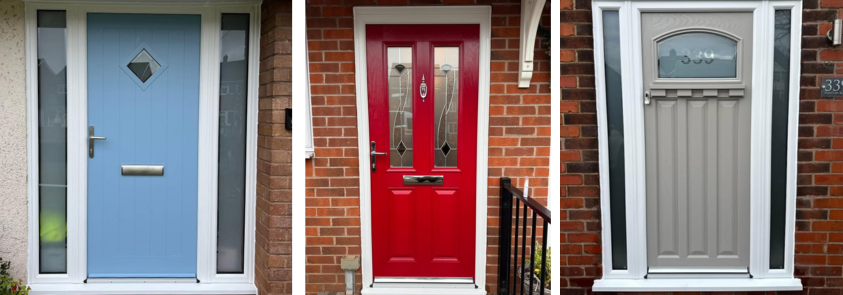
What Makes Composite Doors Different?
Unlike standard uPVC doors (which are hollow or packed with light insulation) or timber doors (made from a single slab of wood), composite doors are engineered using a combination of materials designed to eliminate the weaknesses of traditional doors:
- Solid Core: A dense timber or high-density insulating foam core.
- Reinforced Sub-Frame: Sturdy steel- or glass-reinforced plastic internal frames.
- Outer Skin: A thick Glass-Reinforced Plastic (GRP) skin that resists scratching, fading, and weather damage.
The Key Benefits: Why They Worth the Cost
| Feature | Composite Doors | Standard uPVC | Solid Timber |
| Price Point | Mid to High (£1,000 – £2,500+) | Low (£500 – £1,000) | High (£1,500 – £3,500+) |
| Lifespan | 30+ Years | 15 – 20 Years | 20 – 30+ Years (requires care) |
| Security | Exceptional (Impact-resistant core) | Moderate | High (depends on wood quality) |
| Thermal Rating | Superior (Low U-values) | Good | Moderate |
| Maintenance | Minimal (Wipe clean) | Minimal | High (Sanding, painting, staining) |
1. Unmatched Home Security
Because composite doors are up to 44mm–48mm thick with solid cores, they are nearly impossible to breach with forced entry. When paired with multi-point locking systems and anti-snap cylinder locks, they typically meet Secured by Design (Police Preferred Specification) standards.
2. Lower Energy Bills
The combination of a high-density insulating core and weather-tight rubber seals prevents cold draughts and retains hallway heat. Upgrading from an old single-glazed or aging uPVC door to an A-rated composite door significantly reduces heat loss at your main entrance.
3. Kerb Appeal Without Maintenance
Timber doors look fantastic but warp, peel, and rot when exposed to UK rain and humidity. Composite doors feature realistic woodgrain embossing on a GRP skin that never requires sanding or painting – it simply wipes clean with soapy water.
When Might a Composite Door Not Be Worth It?
- Tight Budget: If upfront capital is limited, a high-spec, modern multi-chamber uPVC door offers reliable weather protection and security for roughly half the cost.
- Listed Properties / Conservation Areas: Some strict local planning authorities require genuine traditional timber joinery for period properties rather than composite materials.
Find the difference between uPVC doors vs composite
The Bottom Line
While a composite door costs more upfront than standard uPVC, its 30+ year lifespan, zero ongoing maintenance costs, reduced energy bills, and added house value make it one of the highest-return home improvements you can make.

Ready to Upgrade Your Home’s Entrance? Discover our wide selection of secure, energy-efficient composite doors available in a variety of colours and styles. Built to last and fitted by local West Midlands experts.